
Introducing: Whiteboard Wednesdays! A brand new initiative that we are excited to launch to help YOU achieve your ideal healthy lifestyle inshaAllah! Every Wednesday at 7pm EST we will be doing a whiteboard presentation, discussion & Q&A featuring cutting edge research on major issues in health and fitness that matter to you and your family’s life. Tune in for the LIVE Facebook broadcast every week to join the discussion!
Today’s topic: Treating Depression & Sadness with EXERCISE
Many people overlook anxiety and depression, and believe that they are immune to these “conditions”. The truth of the matter is that everyone experiences these feelings of sadness and depression. It is a result of anxiousness to what their future holds, especially in difficult times. Today’s topic is dedicated to one of our Amanah Fitness Bootcamp members, sister Farhanah–who has shared her experience of living with depression as a Muslim woman. Farhanah helps us understand how it feels to live with ongoing depression by describing her experiences in this moving post:
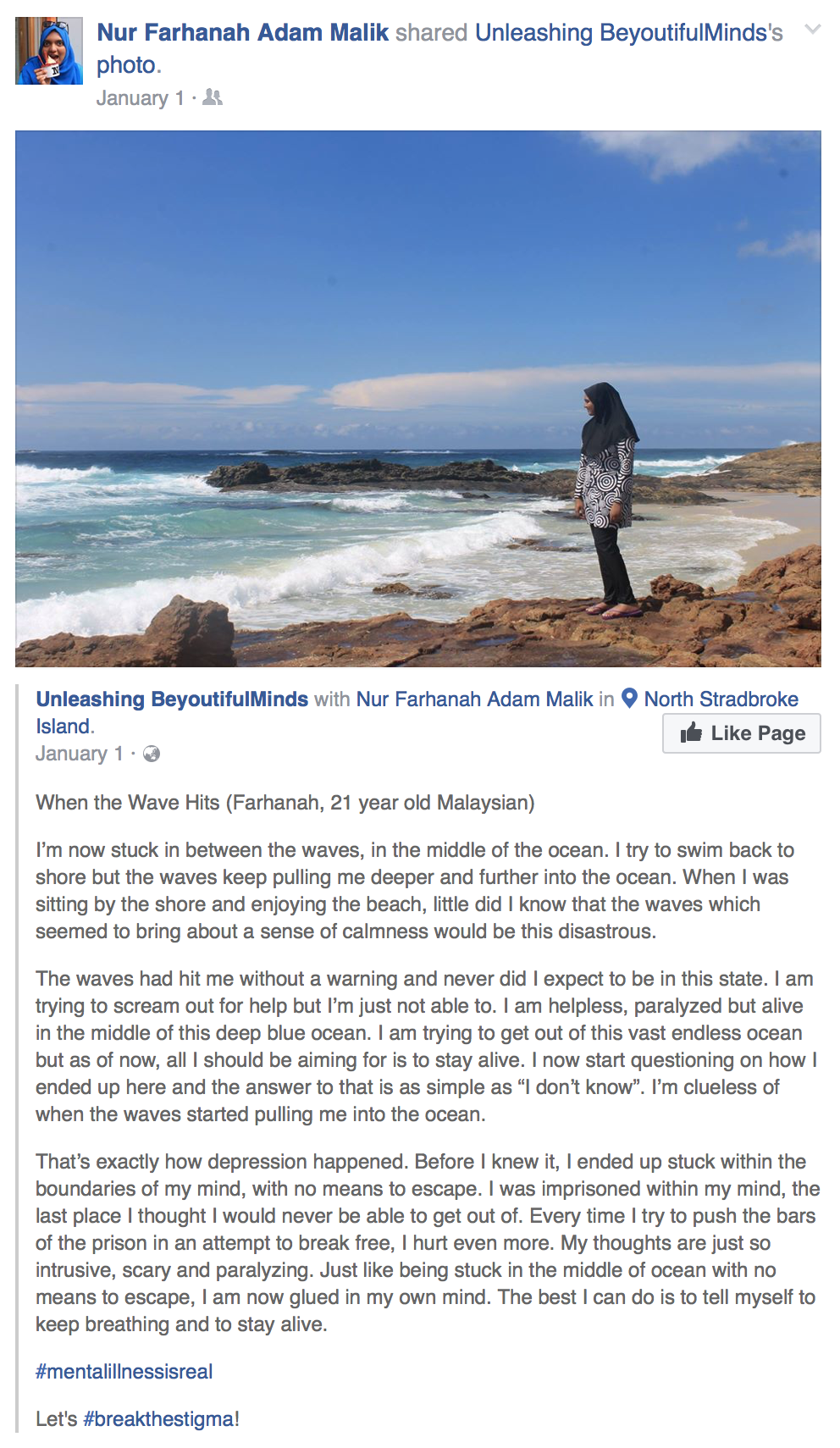
Whether you are struggling with depression or sadness, today’s topic will discuss foundational misconceptions of mental health, and provide you with a framework for using EXERCISE as a treatment and preventative medicine to fight depression and sadness. Be sure to share this information with friends and family you know who are struggling with sadness or depression – exercise is an easy, affordable way to improve your mental health at home!
Mental Health Misconceptions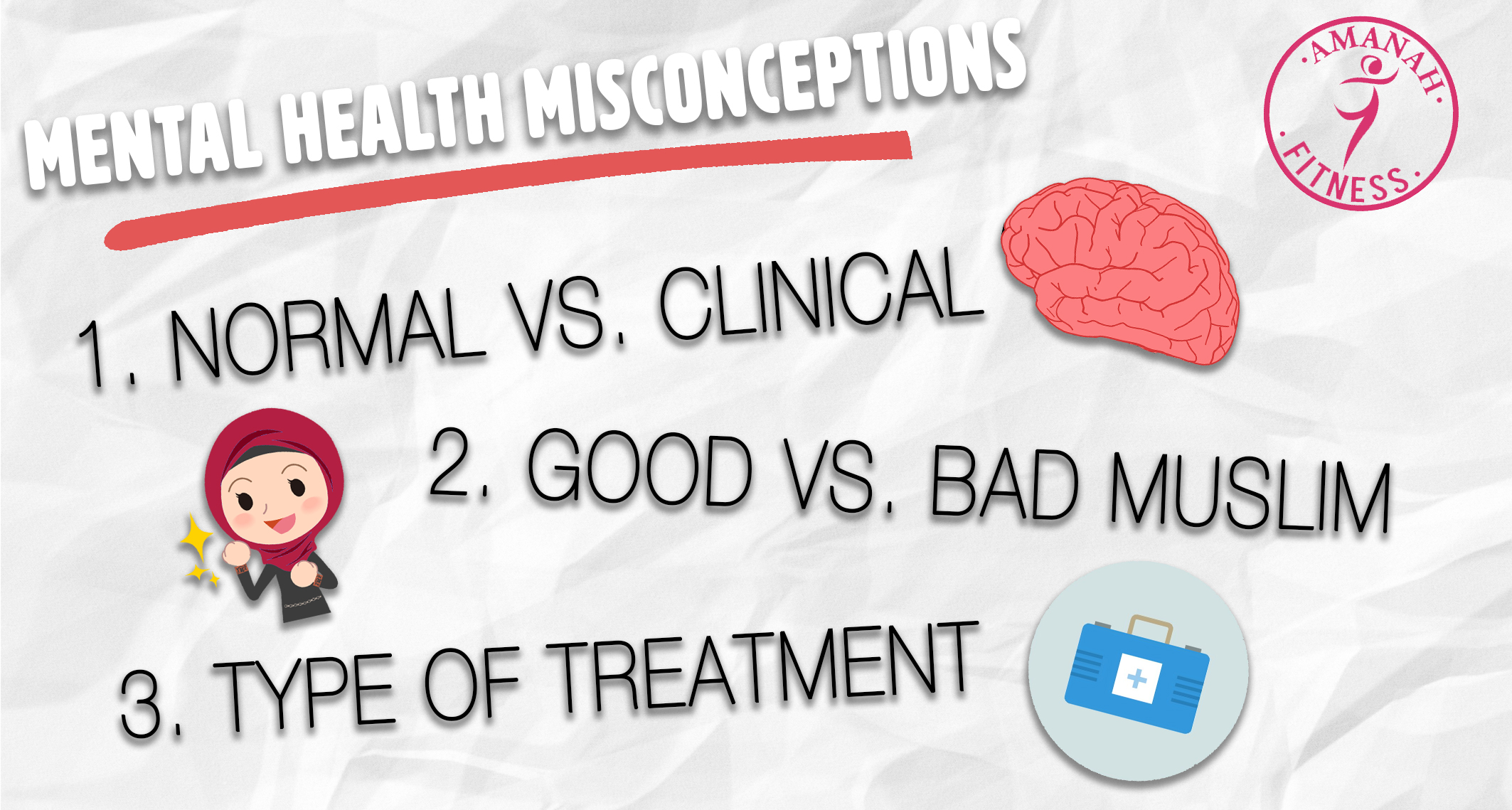
1. Normal vs. Clinical
The is the misconception that mental health is divided in two boxes: you are either normal or you have an illness. On the contrary, mental health is actually a spectrum of feelings and emotional stability that occurs within everyone’s life. The fact of the matter is that different people range differently on that spectrum; they experience different feelings of sadness and emotions within their lives. It would actually be un-normal for an individual to not experience these emotions.
2. Good vs. Bad Muslim (Iman)
This is the misconception that a person who is struggling with mental illness has a lack of Iman (Faith). This ideology is COMPLETELY INACCURATE! The belief that a person’s faith is due to their emotions and feelings as well as how they interact with the world is something believed by many people. If we look at it from an Islamic perspective, it is sometimes seen as a virtue when it comes to having certain feelings towards certain events, for example the being sad because of the passing of loved one.
3. Treatment
There are many misconceptions people have regarding the treatment of mental illness. Two extremes that people resort to are: disregarding the biological component of mental illnesses, or they focus on the reduction of the human mind such as in the western approach. Not disregarding these two factors but finding the appropriate avenues for individuals and engaging them in meaningful conversations is an important step we can take as a community in working to prevent mental illness. A study from 1975 showed that adults in the United States engaged in only 3 meaningful conversations over a span of 6 months! Imagine if we all worked together to spread happiness and as a community helped prevent mental illnesses.
The ‘Exercise Effect’
Now jumping into the topic! Modern literature shows a very strong evidence that physical exercise can be used in the treatment of depression as well as a wide variety of other mental illnesses. The first research to show this was a trial in 1979 that randomized 28 individuals into 2 separate groups: one treated with psychotherapy and the other part of a running group. They found that the decrease in depressive symptoms was the SAME for both groups! Running helped DECREASE THE EFFECTS OF DEPRESSION! By using exercise as an adjunctive therapy and a type of preventative medicine then we can reduce the symptoms and our risk of mental illness.
What is ‘Adjunctive Therapy‘?
Adjunctive therapy is an additional treatment used alongside the primary treatment given by a psychotherapist or general practitioner. For example, running mentioned above, can be used adjunctive to the treatment prescribed to you by your doctor to get better results.
What is ‘Preventative Medicine‘?
Preventative medicine is when you use different methods (i.e. exercise) to help prevent certain mental illnesses and diseases of the body. Studies show that there is a 60% greater likelihood of getting depression if you don’t exercise! All you have to do is exercise! Its free, effective and you get so many benefits alongside it.
How does Exercise Fight Depression?
Farhanah is now a member of Amina’s 30 Day Bootcamp Fat Loss Fitness Program for Muslim women. She describes the effect of exercise on her mental health and depression and encourages other sisters to use exercise as a means of coping, as well:
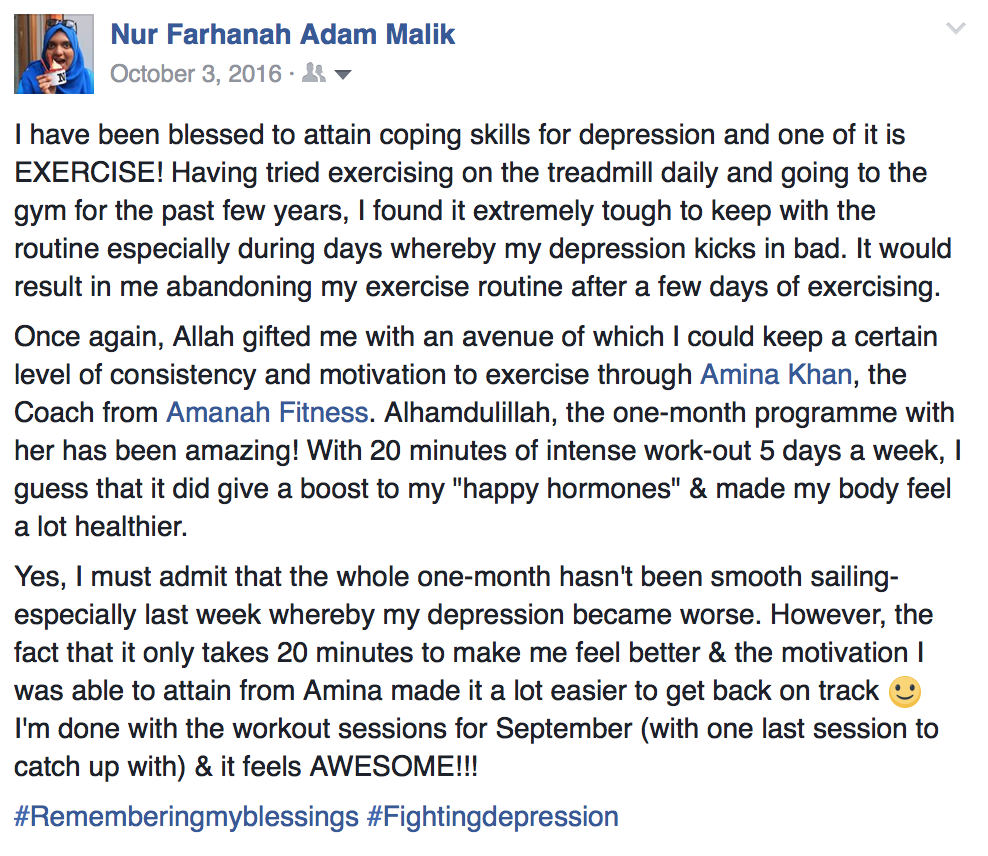
So how does exercise actually help your mental health? Let’s look at the biology to understand the effects of exercise on the brain.
1. Exercise increases levels of Neurotrophic Growth Factors (NGF) in the brain.
When hearing this it may sound scary but it’s really not. Neurotrophic Growth Factors (NGF) are just chemicals which help promote healthier brains and stronger neural connections. A study in Japan showed that individuals who had completed exercising (i.e. running) had an increase in these NGFs in the brain! Seratonin is another chemical in your brain that allows you to achieve a sense of happiness and contentment opposite to that of depression. Just like the NGFs, Seratonin has also been shown to increase after completing physical exercise.
THE-BOTTOM-LINE: Exercise releases “feel-good” chemicals in your brain, to fight depression & sadness!
2. The “Transient Hypofrontality” Hypothesis.
The prefrontal cortex, a part of your brain, has been found to have more activity in those who suffer with anxiety. A study found that EXERCISE helped reduce the symptoms because the prefrontal cortex also played a role in motor movements. So instead of focusing on all of the stresses in their life, the prefrontal cortex focused on doing the exercise movements.
What types of exercise is best?
So you may be wondering, which exercise is the best in terms of fighting depression? There are many different types of exercises which are mentioned in recent literature, these include:
Aerobic vs Anaerobic: Research mentions that BOTH are seen as equally effective right now. Nowadays, the focus is on running, because of how simple it is and how effective it is on our mental state. You can find some examples of exercises in my FREE EXERCISE EBook to help you gain a better mental state:

Frequency of Exercise: How much exercise a week do I have to do to achieve the therapeutic and preventative benefits? Our recommendations, based on current research is to exercise at least 90 minutes per week. It is a manageable time, which sounds tough, but is honestly really simple when you think about it. Breaking up your exercise sessions into 20 minute sessions per day, like I do in my 30-day Bootcamp, really allows individuals to experience the benefits of the exercise for the entire week!
Intensity of the exercise: How hard should we exercise? Research shows that mild intensity exercise doesn’t really provide the same benefits as intense workouts. So we really have to push ourselves in our workouts and aim to achieve these protective factors inshaAllah.
Spirituality and Religiosity: The core of the Muslim is our relationship with Allah (SWT). Our spirit and body work together to experience a reliance upon Allah (SWT) to realize our state in hardships and adversities. As a community we all play a role to push people forward and encourage healthy treatments and being active. We have to be there for each other and help each other through our journeys.
That is it for our first episode of Whiteboard Wednesdays. I hope you enjoyed this article and helped you understand more on how EXERCISE can help mediate and prevent DEPRESSION. Stay tuned next week for our 2nd episode of Whiteboard Wednesdays inshaAllah!

About Amanah Fitness
Are you a Muslim struggling to lose weight? Have you tried restrictive diets that don’t work? Do you feel that your exercises aren’t working to burn fat despite your best efforts? How do you reach your ideal weight, learn how to be healthy, and maintain it for life? Amanah Fitness helps you lose weight, get healthy and keep fat off for life through effective at-home exercise and healthy eating programs (with NO diets or special equipment necessary!)
The goal of Amanah Fitness is to create a mass movement towards a healthier Ummah, inshAllah. Click here to signup for a FREE workshop on burning fat faster and avoiding the most common weight loss MISTAKES with Founder & PhD Student of Health Psychology, Amina Khan!